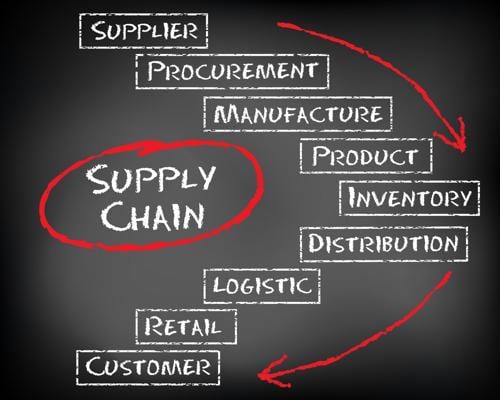
When you put pressure on your supply chain, the cracks will start to show. Amid the holiday rush, when systems and staff are pushed to their limits, inefficiencies become glaring problems holding your business back. The good news is that every new fiscal year is an opportunity to reassess and improve your processes. As most markets are volatile and competitive, boosting supply chain efficiency has become a strategic advantage and a business imperative.
Supply chain efficiency is a measure of the amount of work performed compared to the amount of energy and resources dedicated to getting that work done. It’s a ratio of your input and output. Efficient supply chains save time, reduce operational costs and increase customer satisfaction; meaning the more efficient your systems are, the better your outcomes across the board will be. To get you started, this article will look at 12 ways to improve supply chain efficiency.
Understanding supply chain efficiency
Supply chain efficiency means optimizing the supply chain process to reduce resource waste while meeting customer demand. Whether you manage a global logistics network or a single distribution center, efficiency means getting goods to the right place, at the right time, at the lowest possible cost and without compromising on quality. However, if you’re operating under an inefficient system, your team and tools have to work overtime just to get by.
Supply chain efficiency vs. supply chain effectiveness
Supply chain efficiency is a ratio of your input and output. A highly efficient system gets a lot done with minimal input — time, money, and labor. But that’s only one side of the coin.
It’s possible to have an efficient supply chain that isn’t effective — and vice versa. Supply chain effectiveness is about how well your operations meet customer expectations. For example, a lean inventory model may reduce costs but risk stockouts that frustrate buyers. True success means balancing efficiency and effectiveness for long-term, scalable performance.
12 ways to increase your supply chain efficiency
1. Set clear goals
Don’t forget the big picture when planning your way forward. A study conducted by the Business Continuity Institute (BCI) found that nearly two-thirds of businesses aren’t monitoring supply chain performance. Use data to uncover bottlenecks and align stakeholders around shared KPIs — like order accuracy, inventory turnover, and fulfillment speed. Without measurable goals, you can’t track improvements or identify inefficiencies. Your goals should align with overall business objectives and clearly communicated across departments.
2. Build a comprehensive training and development program
After establishing your business’ big-picture efficiency objectives and values, get more granular by investing in your workforce at every step of the supply chain. Employees should understand the systems and tools they’re using, from warehouse tech to reporting platforms. Ongoing training programs, performance incentives, and feedback mechanisms can foster a culture of accountability and continuous improvement. And, well-trained teams perform better and help reduce costly mistakes.
3. Increase supply chain visibility
From point-of-origin to point-of-consumption, all stakeholders should have high visibility. Yet, 69% of the BCI survey respondents said they were in the dark. A modern OMS like FlexOMS offers real-time tracking and analytics, enabling better decisions on purchasing, inventory levels, and shipping logistics. Visibility enhances responsiveness, reduces the risk of supply chain disruption, and improves transparency with supply chain partners.
4. Streamline payment processing
Use an OMS that authorizes credit card payments, calculates shipping costs and sales tax and standardizes billing and shipping addresses. These automated features hugely benefit your finance department, create a smoother customer experience, and speed up every supply chain operation link. Reducing friction in payment processing can also decrease the occurrence of manual errors and improve cash flow.
5. Optimize inventory management
Industry data reveals that 43% of small businesses don’t track inventory or rely on manual processes. And, clunky spreadsheets and clipboards aren’t up to the demanding complexity and pace of eCommerce. Use integrated tools like FlexOMS that offer features such as product allocation, automatic purchasing, low-stock alerts, and backorder release. Better inventory management means better cash flow and fewer fulfillment issues. Proper forecasting, safety stock calculations, and regular audits are also essential to prevent excess inventory or stockouts.
6. Create an Efficient Returns System
The returns process doesn’t have to be a hassle for you or your customers. A well-run supply chain handles them with as much care and planning as outbound orders. With the right tools, you can make the process smoother and more transparent: think auto-generated labels, easy-to-use return portals, and a single source of truth for tracking.
7. Develop strong relationships with suppliers
Manufacturers, vendors, and end-users have different needs, and these evolve over time. Strong supplier relationships reduce risk and increase responsiveness. Make sure to build long-term partnerships based on transparency, mutual goals, and service reliability — not just price. Collaborative forecasting and shared visibility tools can strengthen the entire supply chain and improve adaptability in volatile markets.
8. Automate supply chain processes
Process standardization and automation are key, but increased visibility and real-time data analytics are just as important. Automating inventory updates, shipment tracking, procurement, and reporting reduces manual intervention and boosts overall efficiency. Consider robotics for warehouse tasks or AI-powered software for demand forecasting to further optimize operations.
9. Proactively manage vendors
Nearly all supply chains depend on a web of vendors and service providers. Set clear performance benchmarks and conduct regular reviews. Consistent standards lead to smoother operations and stronger alignment across your supply chain partners. Tools like vendor scorecards or dashboards help monitor service quality, lead times, as well as communication metrics.
10. Aim for sustainable practices
Eco-conscious choices often improve efficiency. Reduce unnecessary packaging, consolidate shipments, and consider using biodegradable materials or SIOC packaging. Customers increasingly reward sustainable brands, and sustainability can enhance long-term supply chain resilience. A green supply chain strategy can also reduce energy use, packaging costs, and waste.
11. Leverage real-time supply chain data
To boost efficiency, focus on streamlining your input. Use platforms like FlexOMS to access real-time insights into orders, inventory, and shipping. This allows you to identify slowdowns, monitor inventory levels, and respond to supply chain disruptions before they escalate. Granular data enables agile decision-making, and predictive planning.
12. Enact a continuous improvement process
While focusing on improving supply chain efficiency, you’re also adding value upstream and downstream. Regularly reassess your supply chain strategy using the latest data and industry benchmarks. Even small tweaks can produce large gains in operational efficiency. Encourage feedback from staff and partners to uncover process gaps and innovation opportunities.
How to measure supply chain efficiency
Tracking the right metrics is key to understanding and improving overall supply chain efficiency. Here are four you should regularly monitor:
Perfect order index – This one rolls a few things together: deliveries that arrive on time, in full, undamaged, and with all the correct documentation. If it’s slipping, it’s often a sign that coordination is breaking down somewhere.
Service rate – This tells you how reliably you meet your delivery promises. A strong service rate builds trust with customers. If it drops, it could point to issues with lead times, shipping partners, or even your internal scheduling.
Order accuracy – When a customer places an order, they expect to get exactly what they asked for. This metric shows how often that actually happens. It helps you spot where errors are creeping in, whether that’s during picking, packing, or system syncing.
Inventory turnover ratio – A high turnover means your stock is moving efficiently, which keeps costs down and cash flowing. A low number might mean you’re holding on to too much inventory or not moving the right products fast enough.Together, these metrics help you track what’s working, flag what’s not, and guide smarter decisions across your supply chain. Over time, they can become some of your most valuable tools for building a more responsive and resilient operation.
Ready to improve your supply chain efficiency?
An efficient supply chain isn’t just about saving money — it’s about creating a system that works smarter at every stage. The right order management system helps you cut delays, reduce errors, and make better decisions in real time. With FlexOMS, you get the visibility and control to keep things running smoothly, even when demand spikes or plans change.