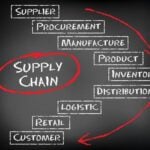
From bulk pallets to individual customer orders, today’s logistics is about more than just storage. As the supply chain has changed, so have the words we use to describe its parts.
The word “warehouse” once served as a catch-all for any facility where goods were stored, but as operations became more complex, new distinctions emerged. Terms like fulfillment center and distribution center have become increasingly common with the rise of ecommerce, each carrying subtle but important differences in function and focus.
This article breaks down the differences between fulfillment and distribution centers, explores how a hybrid fulfillment distribution center operates, and outlines the five key services these facilities offer. Whether you’re shipping to big-box retailers or direct to customers, understanding these operations is essential to streamlining your supply chain and meeting today’s logistics demands with greater speed and accuracy.
Defining fulfillment distribution centers
Before we get into what makes fulfillment distribution centers unique, it helps to revisit the definitions of the terms often used interchangeably — warehouse, distribution center, and fulfillment center.
What is a warehouse?
A warehouse is a dedicated facility for storing goods, components, or finished products before they move along to the next step in the supply chain. While the core purpose is inventory storage, the use cases vary. Some serve as overflow for seasonal peaks, others as a buffer against supply chain disruptions.
Warehouses come in many forms — from cold storage to secure vaults — operated by manufacturers, retailers, or third-party providers. The common thread is that they all prioritize stock preservation over rapid movement. But many now function as smart warehouses, blending storage with light fulfillment and supporting omnichannel distribution.
What is a distribution center?
A distribution center (DC) is built for speed. These high-throughput facilities receive bulk product and rapidly sort, pick, and ship to the next stop, typically a store, a regional hub, or another link in the B2B chain. DCs are designed to minimize time on the floor. Think cross-docking, multi-dock infrastructure, and optimized routing. They form the backbone of business-to-business logistics, with limited inventory storage and a high focus on logistics operations.
What is a fulfillment center?
A fulfillment center is purpose-built for direct-to-consumer (DTC) and ecommerce. These centers handle individual customer orders, including picking, packing, and shipping — often across thousands of SKUs.
They also manage returns (reverse logistics), kitting and value-added services like gift wrapping or customized packaging. With tight SLAs and high expectations, the performance of a fulfillment service is directly tied to customer satisfaction and brand reputation.
What is a fulfillment distribution center?
A fulfillment distribution center merges all three functions. It blends a warehouse’s capacity, the DC’s speed, and the fulfillment center’s complexity-handling. These hybrid operations support both bulk shipments and eCommerce fulfillment, creating a more agile, scalable, and cost-effective model.
That means handling demand spikes, switching seamlessly between order types and using technology, space, and skilled teams to keep everything running smoothly, from inventory storage to final delivery.
5 fulfillment distribution center services
Operating a fulfillment distribution center involves several services. The right provider will support your business through:
1. Peak season flexibility
Retail doesn’t wait—and your logistics can’t afford to either. Fulfillment distribution centers are designed to scale dynamically during peak seasons, from holiday spikes to unexpected demand surges.
This flexibility comes from modular warehouse space, trained warehouse workers and systems that allow for quick adjustments, like reassigning zones, prioritizing SKUs, or expanding pick-pack capacity. Done right, this elasticity keeps your operations humming, so your brand stays reliable, even when demand doubles overnight.
2. Location strategy and transit speed
Where you store inventory affects how fast and affordably you can ship it. Fulfillment distribution centers located near urban centers, ports, or transport corridors can reduce shipping costs and improve delivery SLAs. The smartest networks use regional hubs and access to multiple shipping carriers to limit split shipments and last-mile delays. This strategy pays off in speed, consistency, and customer loyalty.
3. Tech stack for visibility and control
Modern fulfillment operations run on data. A solid fulfillment distribution center connects your OMS with a warehouse management system (WMS) to automate workflows, track inventory levels, and reduce errors. With barcode scanning, predictive replenishment, and automated shipping labels, your team spends less time reacting and more time optimizing. The result is a smoother fulfillment flow and better performance across the board.
4. Balancing bulk and direct-to-consumer orders
Not every order looks the same. Some are headed to a retail store, others to someone’s doorstep. A fulfillment distribution center can handle both without bottlenecks. By segmenting space and workflows, one team can focus on wholesale bulk while another manages pick-pack for individual customer orders. This means no duplication or confusion, just better throughput across channels.
5. Metrics that drive better decisions
These centers ship, store, and track — and that last one is key. A smart fulfillment distribution center gives you data to spot breakdowns early, refine your fulfillment process, and better meet customer demand across every channel.
Here are some of the most valuable metrics to monitor:
Fulfillment accuracy rate – How often are items picked, packed, and delivered without errors?
On-time delivery rate – Are orders reaching customers within promised timeframes?
Inventory turnover – How often are products sold and replenished? This metric points to lean, responsive inventory management.
Order cycle time – The average time from when an order is placed to when it’s shipped. A strong indicator of overall logistics performance.
Warehouse space utilization – How efficiently is your available warehouse space being used for active SKUs vs. overstock?
Return rate – A high return rate can signal issues with order accuracy, product descriptions, or reverse logistics.
Cost per order – This helps track fulfillment operations expenses and evaluate whether you’re getting real cost savings from your current setup.
Backorder rate – How often do you run out of stock before you can fulfill a purchase? Helpful in identifying weak spots in inventory storage and forecasting.
These metrics offer a clear window into how well your logistics operations are performing and where to focus your time, resources, and energy for the biggest payoff.
SFG can help you simplify the process
Need a fulfillment provider who understands complexity and scale? At SFG, we specialize in supporting multi-channel ecommerce business operations through our integrated fulfillment distribution center network.
With FlexOMS™, you get real-time control, seamless automation, and a centralized platform for managing your logistics from order to doorstep.
Are you ready to increase control and reduce complexity? Contact SFG today to learn more about our FlexOMS™ solution.